For healthcare & Wellbeing professionals
How SpaceCare effectively tackles barriers and supports homework task success as a therapy homework app
Prof. Jason Spendelow, Clinical Psychologist
Summary
Psychotherapy homework is a crucial component of many evidence-based treatments. It helps clients apply skills and insights gained in therapy to their everyday lives, promoting lasting change. Homework bridges the gap between therapy sessions and real-world situations, reinforcing learning and promoting generalisation of skills.
However, many barriers exist to homework engagement, quality, and completion. By addressing key barriers and incorporating evidence-based strategies as a therapy homework app, Emotipal can significantly enhance client engagement, quality, and completion of psychotherapy homework. It provides a platform for therapists and clients to work together, creating clear, specific, personalised, and effective homework plans that promote therapeutic progress and lasting change.
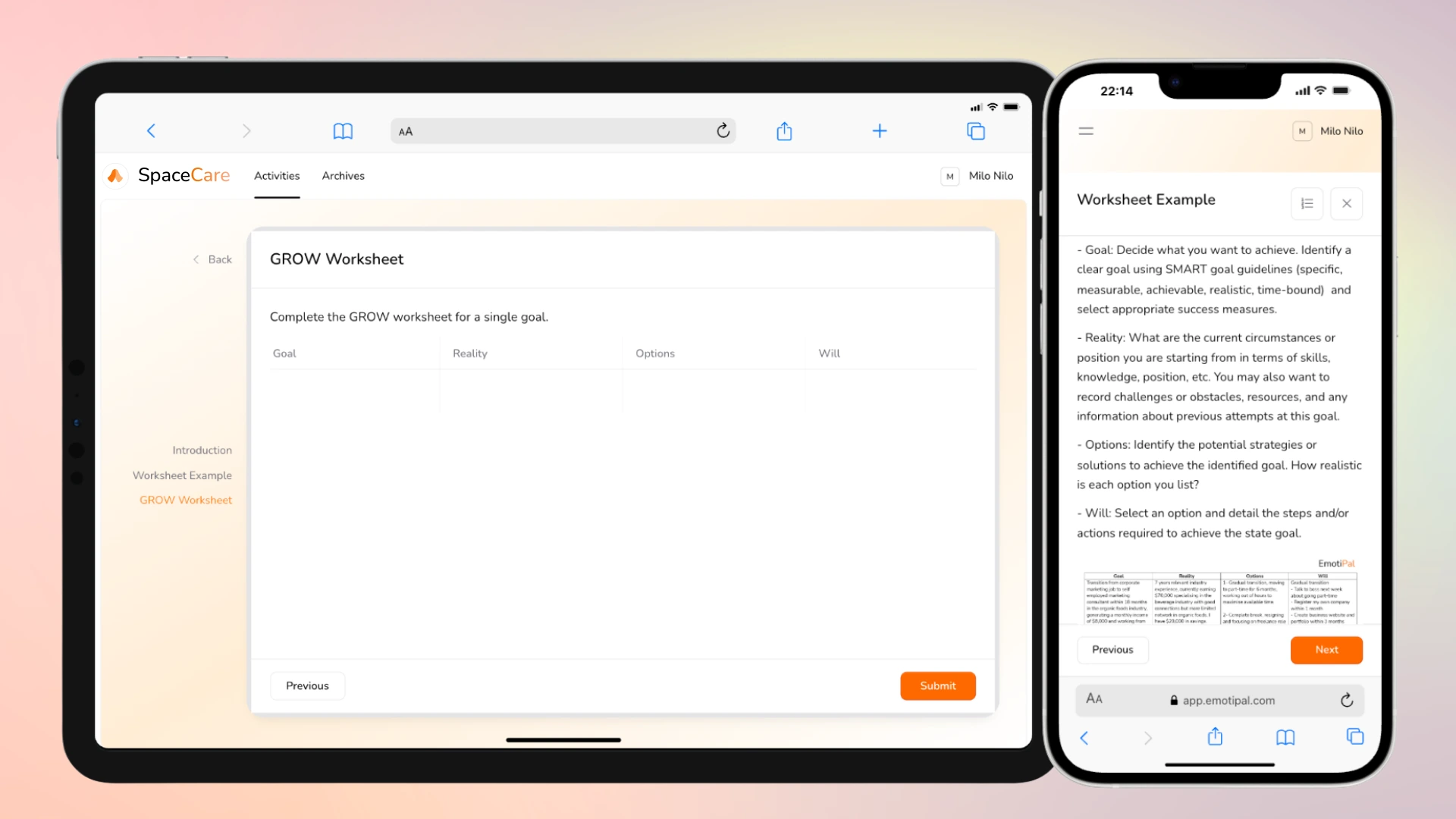
How a Therapy Homework App Can Support Better Client Engagement
Psychotherapy is most effective when the work extends beyond the therapy session itself.
During appointments, clients gain insight, learn new skills, and explore challenges. But real change usually happens between sessions, when people apply those ideas in their daily lives.
This is where therapy homework becomes essential.
Homework assignments allow clients to practice coping strategies, observe patterns in their thinking, and experiment with new behaviours in real-world situations. :contentReference[oaicite:1]{index=1}
However, many healthcare professionals encounter practical challenges when assigning and managing these exercises.
Why Therapy Homework Matters
In many evidence-based approaches such as Cognitive Behavioural Therapy (CBT), homework is considered a central part of treatment.
These activities help clients translate insights from therapy into real-life behaviour change.
Examples of common therapy homework include:
- Thought records and reflection exercises
- Mood tracking
- Behavioural activation tasks
- Exposure exercises
- Journaling activities
Research shows that practising these skills between sessions helps clients integrate therapeutic learning and strengthen long-term outcomes. :contentReference[oaicite:2]{index=2}
Despite this evidence, homework is often underused or inconsistently completed.
Common Barriers to Therapy Homework
Healthcare professionals frequently encounter barriers when assigning homework activities.
These may include:
- Clients forgetting to complete exercises
- Limited time to explain tasks during sessions
- Difficulty tracking progress between appointments
- Paper worksheets being lost or ignored
- Lack of engagement with static materials
As a result, exercises that could strengthen treatment sometimes remain unused.
How a Therapy Homework App Can Help
Digital tools are beginning to address many of these challenges.
A therapy homework app allows professionals to transform traditional worksheets into interactive digital activities that clients can access from their phone or computer.
Instead of relying on printed worksheets or email attachments, professionals can provide structured exercises that are easier for clients to complete and revisit.
This approach makes therapy feel more continuous rather than limited to scheduled sessions.
Benefits of Digital Therapy Homework
When therapy homework is delivered through a digital platform, several benefits can emerge:
- Better engagement – Clients are more likely to interact with digital exercises.
- Greater accessibility – Activities can be completed anywhere.
- Improved structure – Professionals can organise exercises more clearly.
- Progress tracking – Patterns and responses can be reviewed over time.
- Consistency – Clients can return to exercises whenever needed.
These features help reinforce the learning that happens during sessions and encourage continued reflection.
Supporting Change Between Sessions
Ultimately, therapy is not only about conversations that happen during appointments.
It is about helping people build new habits, perspectives, and behaviours in their everyday lives.
Homework assignments allow this process to unfold in real-world environments.
Digital tools can make these activities easier to access and more engaging for clients.
Final Thoughts
Therapy homework remains one of the most powerful ways to reinforce progress between sessions.
By helping clients practice skills in daily life, these activities strengthen therapeutic learning and support lasting change.
Technology does not replace the relationship between healthcare professionals and their clients.
However, tools such as therapy homework apps can help professionals structure exercises more effectively and support meaningful engagement between sessions.